20 Years Without the Overseer: The Legacy of Professor X
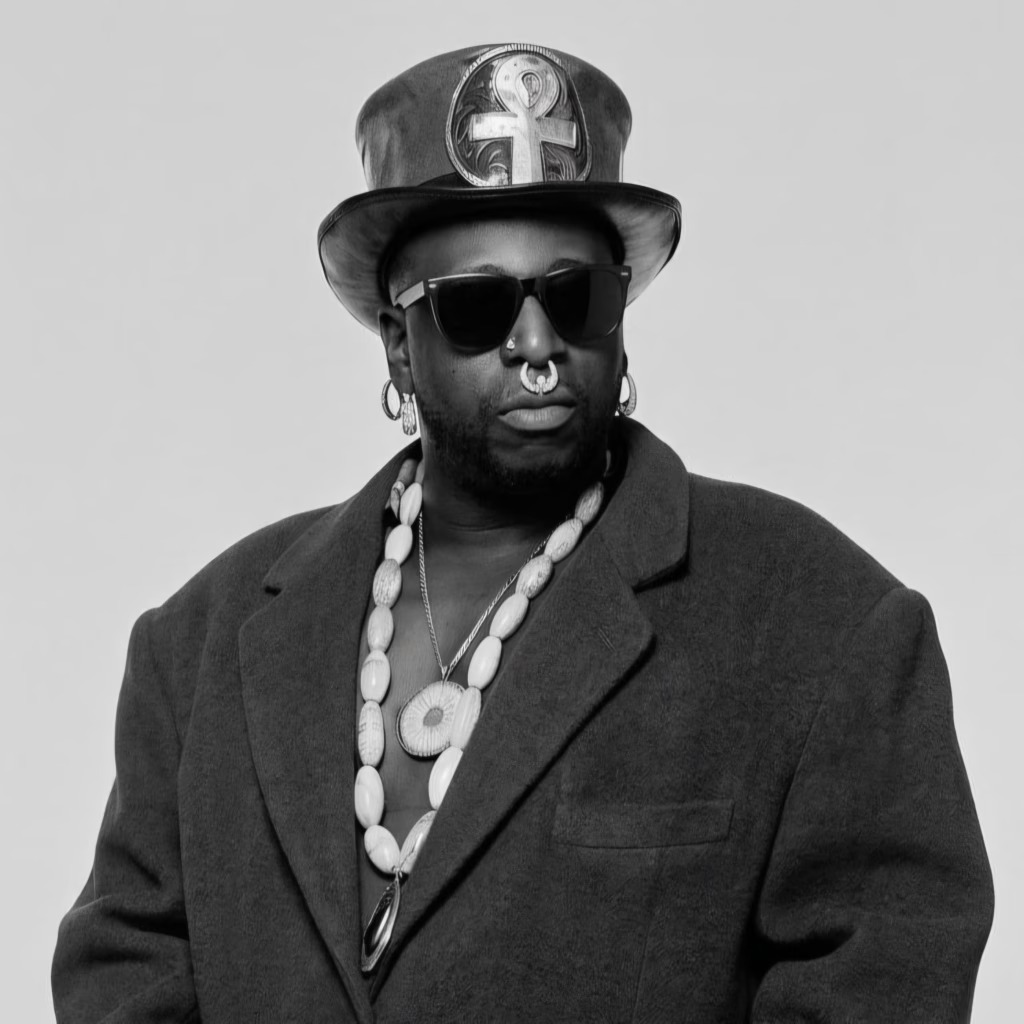
Today, March 17, 2026, marks exactly two decades since the hip-hop world lost Lumumba Carson, better known as Professor X the Overseer. As the ideological engine behind the legendary X Clan and the founder of the Blackwatch Movement, Professor X wasn’t just a voice on a track; he was a mentor, a sage, and the guardian of an era where self-knowledge was just as vital as the breakbeat.
To understand the essence of Professor X, one must look at his lineage. Lumumba was the son of the iconic Brooklyn activist Robert “Sonny” Carson. His father’s autobiography, The Education of Sonny Carson, and the subsequent 1974 film, served as a blueprint for a generation of hip-hop artists seeking political identity. Growing up in a household defined by boycotts and community organizing, Lumumba learned early on that music without a mission was hollow .
Before assuming the mantle of “The Overseer,” Carson was a power player behind the scenes. Through Scratch Me Management, he helped shape the careers of legends like Stetsasonic, King Sun, and Positive K. However, his true calling manifested in the late ’80s when he formed X Clan alongside Brother J (Grand Verbalizer), Sugar Shaft (Rhythm Provider), and Paradise (The Architect).
X Clan disrupted the scene in 1990 with their debut masterpiece, To the East, Blackwards. While their peers in Public Enemy utilized an aggressive, industrial sound, X Clan looked toward the heavy P-Funk of George Clinton. Professor X, a self-described “funk-head,” argued that the community responded best to the “lesson” when it was delivered over a groove that made the “body rock”.
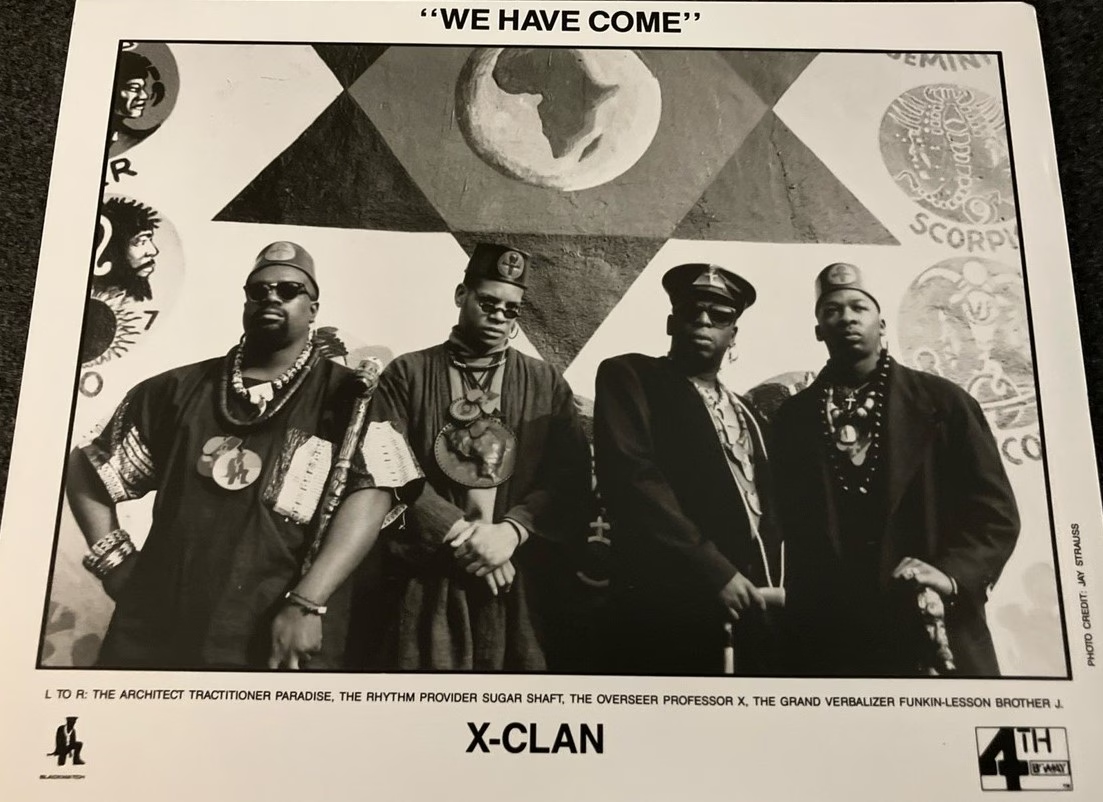
His role within the group was unique. He didn’t rap in the traditional sense; he delivered orations, poetic diatribes, and spiritual “seals” for every track. His signature slogans—“Vanglorious! This is protected by the red, the black, and the green, with a key… Sissy!“—became immortalized in hip-hop lore. The colors represented Marcus Garvey’s UNIA flag, while the “key” symbolized 360 degrees of historical and self-awareness.
Though his strength was most evident within the collective, Professor X released two solo LPs: Years of the 9, on the Blackhand Side (1990) and Puss ‘N Boots (The Struggle Continues…) (1993). Critics often noted that he was “not a rapper” but rather a master of “epistle grandstanding,” using hip-hop instrumentation as a platform for his militant rhetoric.
Perhaps his most significant solo contribution was the anthem “Close the Crackhouse“. This nine-minute posse track addressed the drug epidemic with a heavy-hitting lineup including Chuck D, Big Daddy Kane, Digital Underground, and Sister Souljah. It remains a testament to the immense respect the Overseer commanded across the industry.
Carson’s passing in 2006 at the age of 49 due to spinal meningitis underscored a pervasive issue in hip-hop: the lack of health insurance for the genre’s pioneers. Despite the billions generated by the music, many of its foundational figures were left without a safety net.
Today, X Clan lives on through the “Millennium Cipher” led by Brother J, but the absence of the Overseer’s guiding staff is deeply felt. He was the bridge between the radical activism of the Civil Rights era and the sonic revolution of the ’90s. He was a man who refused to compromise his vision, staying true to the red, the black, and the green until the very end.
Vanglorious, Professor. The key is still in our hands.



You must be logged in to post a comment.