15 Years of Saigon’s The Greatest Story Never Told
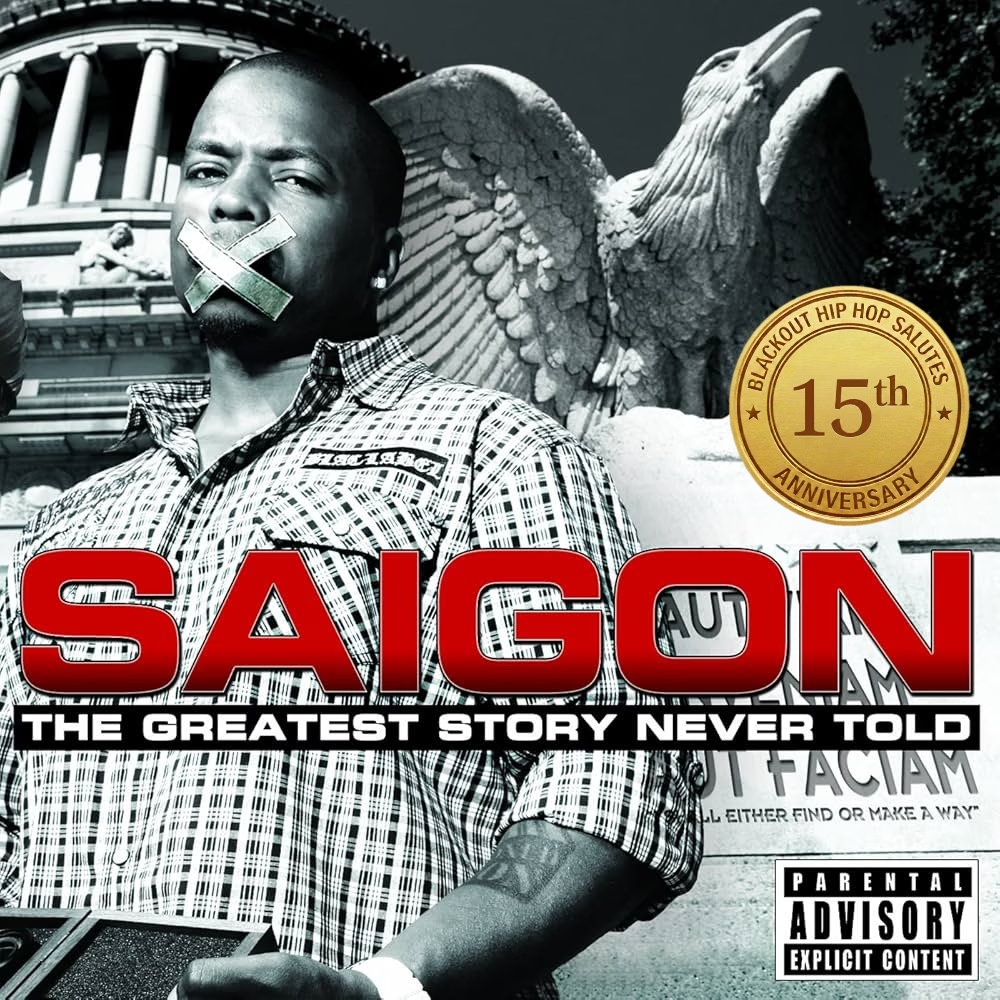
Today is exactly February 15, 2026, which marks fifteen years since Brian Carenard, better known as Saigon, finally dropped his debut studio album, The Greatest Story Never Told. For the younger heads who don’t recall that era, this project was the definition of “vaporware”—something everyone discussed, but no one was sure would ever actually see the light of day.
When Suburban Noize Records finally released the album in 2011, the hip-hop community breathed a collective sigh of relief. At that point, Saigon was already a veteran of “label limbo.” His saga with Atlantic Records is legendary for all the wrong reasons. He signed with them back in 2004, driven by the vision of a platform similar to what legends like Aretha Franklin or Ray Charles once had. However, the corporate machine had a different agenda. Instead of a socially conscious rapper, they tried to mold him into a “jingle writer,” pressuring him to record radio-friendly hits with R&B groups like Pretty Ricky. Saigon flatly refused, and the conflict escalated to the point where he publicly called out the label via MySpace blogs and even announced his retirement from music.
What makes this album stand out, even fifteen years later, is the undeniable chemistry between Saigon and Just Blaze. Just Blaze wasn’t just a producer; he was the architect of the entire sound, eventually acquiring full ownership of the album to rescue it from Atlantic’s grip. The production is grandiose and cinematic, featuring the signature soul samples and heavy drums that defined an era. There’s also the famous story of the beat trade with Jay-Z—Just Blaze gave Saigon’s original “Kingdom Come” beat to Hov, and in exchange, Jay-Z provided a verse for Saigon’s “Come On Baby” free of charge to make amends.
Lyrically, Saigon was at his absolute peak on this record. Tracks like “The Invitation” featuring Q-Tip dissect the prison system and street traps without glorifying the lifestyle. He was a “conscious” MC who didn’t sound preachy; instead, he sounded like someone fresh out of the trenches sharing lessons learned the hard way. “Clap” with Faith Evans is another gem, blending gospel energy with sharp social commentary.
While first-week sales (around 11,000 copies) weren’t blockbuster numbers, critical reception was nearly unanimous—the album received rave reviews and still holds an impressive 89 score on Metacritic. It was a triumph of integrity over the industry. Saigon proved that you could stay true to your vision, even if it meant your “debut” sat on a shelf for seven years. Today, 15 years later, The Greatest Story Never Told sounds like a testament to a time when lyricism and high production value still went hand in hand. If you haven’t spun it in a while, today is the perfect day to revisit this 18-track classic and remember why Saigon was one of the most gifted voices of his generation.