15 Years of Cabin Fever: The Trap Architecture of Wiz Khalifa
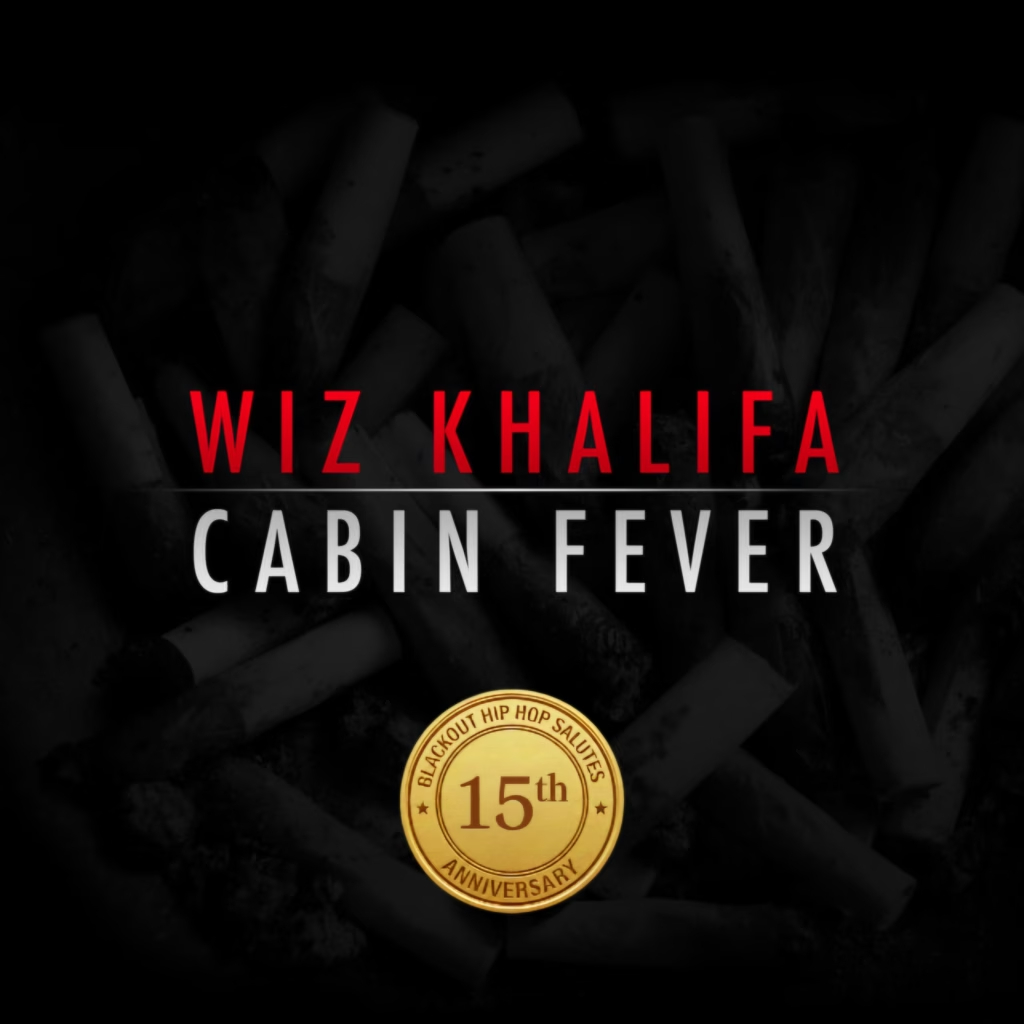
Today is February 17, 2026, and for anyone who followed the hip-hop scene in the early 2010s, it means one thing—we are marking exactly fifteen years since the release of the Cabin Fever mixtape. When this project dropped out of nowhere on that February evening in 2011, no one expected Wiz Khalifa, previously known for his laid-back stoner vibe, to deliver something this aggressive and raw. At the time, Wiz was at the peak of the “blog era,” and the pressure surrounding his major-label debut, Rolling Papers, was immense. Fans feared he might “sell out,” but Cabin Fever served as the perfect insurance that Taylor Gang remained true to its roots.
The primary architect of this sound was Lex Luger, a producer who absolutely dominated the industry in 2011 with his “jackhammer” 808 drums and dark, paranoid synths. Instead of the melodic beats previously handled by ID Labs, Wiz jumped into Lex’s aggressive world, creating a sound that was monotonically powerful and perfectly tailored for club sound systems. Statistically, this project became an absolute giant of digital distribution; with over 1,562,050 downloads on the DatPiff platform, Cabin Fever ranks as the 15th most downloaded mixtape of all time and holds a prestigious Diamond certification.
The opening track, “Phone Numbers,” is remembered as one of the highlight moments of that year. Produced by Drumma Boy, it originally featured a piano sample from Queen’s “We Are the Champions,” giving it a triumphant, stadium-ready feel. Unfortunately, when the project hit streaming services in 2018, the sample clearance couldn’t be secured, and the beat had to be replaced by a remix that, quite frankly, never reached the energy level of the original. The guests on the track, Big Sean and Trae Tha Truth, provided a perfect contrast—Trae’s deep voice against Sean’s rising melodic flow.
The mixtape also brought anthems like “Taylor Gang” with Chevy Woods and “GangBang” with Big Sean, where many critics noted that Sean “stole” the show with his fast and technically precise verses. The collaboration with Juicy J on “Errday” marked the beginning of a long-standing partnership that would define the later part of Wiz’s career and introduce the Three 6 Mafia aesthetic into the Taylor Gang movement. Although critics were initially divided over the new “Trap Wiz” identity, time has shown that this strategic shift was crucial for his longevity.
Today, fifteen years later, Wiz Khalifa is a veteran who continues to perform actively. Just a few days ago, he announced “The Macrodose” tour for April 2026, where he will be joined by 2 Chainz and Berner. While legal issues, such as a nine-month sentence in Romania for drug possession, have occupied the media’s attention in recent months, the musical legacy of Cabin Fever remains intact. In 2024, the project received its first official physical release as part of the Cabin Fever Trilogy box set on red vinyl, finally allowing collectors to own this piece of history in an analog format.
Objectively speaking, Cabin Fever might not be the lyrically deepest project in the genre’s history, but its importance in the architecture of modern trap sound is unquestionable. It was the bridge between stoner rap and the aggressive production that would dominate the rest of the decade. We listen to it today with the same nostalgia as a decade ago, remembering a time when free mixtapes were the most important currency in the game.