10 Years of Thug Talk: Boosie Badazz’s Street Realism
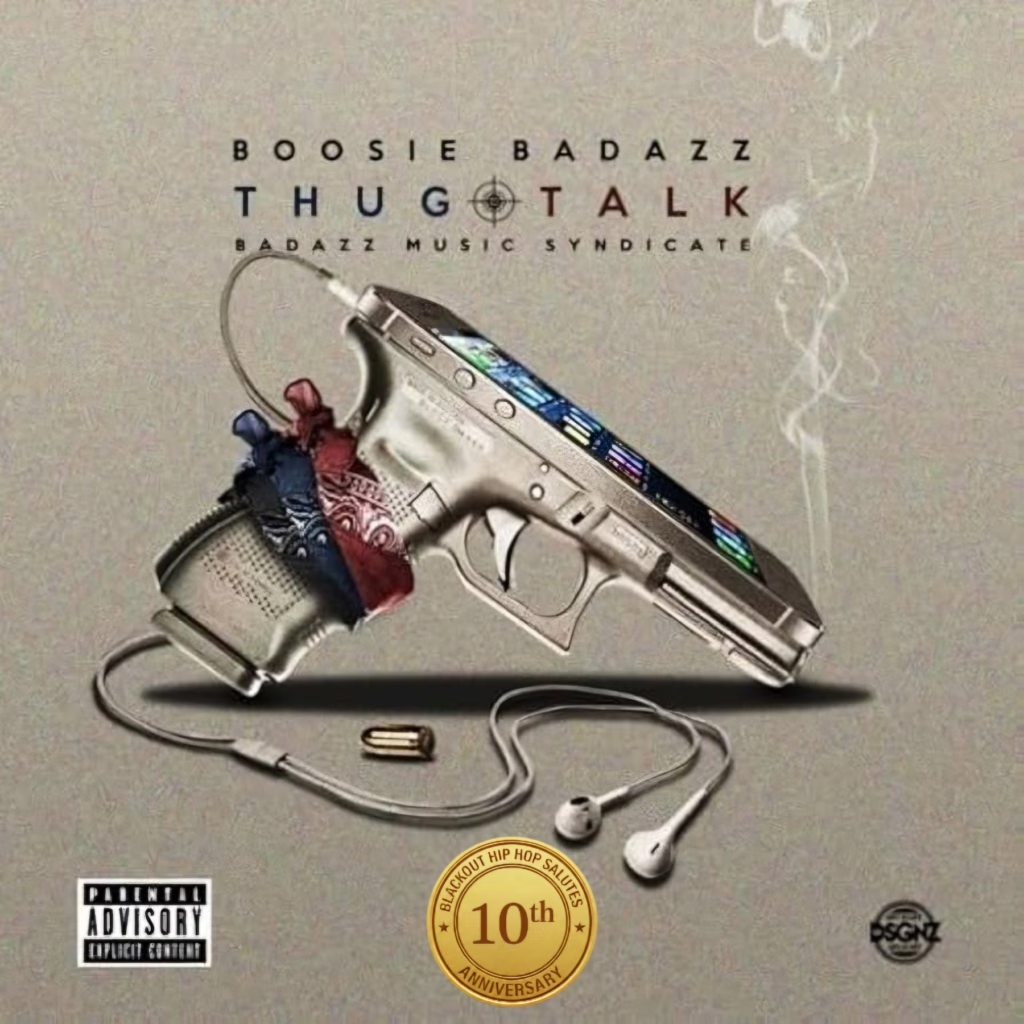
In the fast-paced world of Southern hip hop, few artists carry the weight of authenticity like Torrence Hatch Jr., better known to the world as Boosie Badazz. Today marks the 10th anniversary of his 2016 project, Thug Talk, an album that arrived during one of the most tumultuous yet productive stretches of his career. Released on March 16, 2016, through his independent label Badazz Music Syndicate, the project served as a definitive statement of resilience .
To understand Thug Talk, we have to look at the context of early 2016. Boosie was coming off a miraculous recovery from kidney cancer, a diagnosis that came just as he was regaining his footing after a long prison stint . Instead of slowing down, he went on a legendary run, dropping three full-length projects in the first three months of the year: In My Feelings. (Goin’ Thru It), Out My Feelings (In My Past), and finally, Thug Talk .
While his earlier 2016 releases were introspective and emotional, Thug Talk returned to the gritty, uncompromising street narratives that made him a legend in Baton Rouge. However, this wasn’t just “braggadocio” rap. Critics at the time, including those from XXL and Pitchfork, noted that this was a more mature Boosie—a “retired O.G.” who was now warning the younger generation about the consequences of the game rather than just glorifying it .
The heart of the album is undoubtedly the track “Wake Up,” which features a posthumous appearance from the legendary Pimp C . The song uses old audio of the UGK legend calling out rappers who only talk about the money and drugs but never the prison time or the funerals. Boosie picks up the torch, using his own experiences in Angola State Penitentiary to paint a sobering picture of the “fast life” . It’s real spit, delivered over slow, atmospheric synths that allow the message to hit home.
The production on the album is a masterclass in the Louisiana “ratchet” sound, modernized for the mid-2010s. Producers like G Luck, B Don, and Nicholas “Fouryn” Baker provided backdrops heavy on 808s and melancholic piano stabs . On tracks like “TV,” Boosie gets creative, comparing the drama of his real life to reality shows and classic hood films like Menace II Society, showing that for many in the South, the “movie” is a daily reality .
Featuring heavyweights like Webbie and Z-Ro, Thug Talk wasn’t just another mixtape; it was a commercial success for an independent release, peaking at number 10 on the Billboard Top Rap Albums chart . Ten years later, the album stands as a reminder that Boosie’s greatest strength isn’t just his flow or his beat selection, but his ability to capture the “acute moments of struggle” with a sincerity that few can match . It remains a essential chapter in the Badazz Music Syndicate catalog and a blueprint for independent longevity in hip hop.